Why Does Protein Ice Cream Taste So Artificial — And What’s Different About High-Protein Gelato?
April 1, 2026 · Lifted Gelato
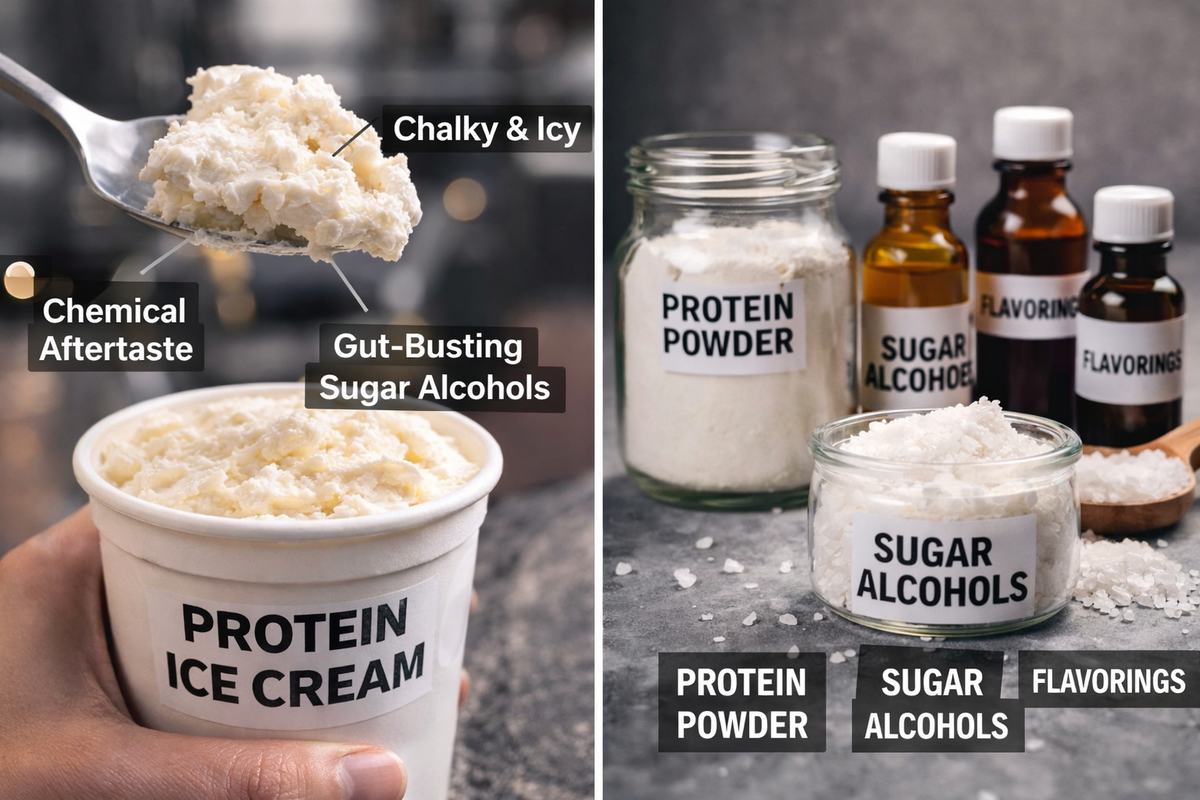
If you’ve ever bitten into a protein ice cream expecting a creamy, satisfying dessert and instead got something that tasted vaguely like a frozen protein shake — you’re not imagining it. It’s one of the most consistent complaints across fitness forums, review sites, and nutrition communities: most high-protein frozen desserts simply don’t taste good. They’re icy, they’re chalky, there’s a chemical sweetness that lingers long after the last bite, and you finish feeling vaguely deceived. So what’s actually going wrong — and does it have to be this way?
The Real Reason Most Protein Ice Creams Taste “Off”
To understand the taste problem, you need to understand the formulation challenge. To make a frozen dessert meaningfully high in protein, manufacturers need to add significant amounts of protein ingredients — most commonly whey protein, milk protein concentrate, or plant-based proteins like pea or soy.
The problem is that these ingredients — especially in high concentrations, and especially when a cheaper, lower-grade protein is used to cut costs — change the flavor profile of whatever you’re making. Raw protein powder has a distinct “protein shake” taste that most people recognize immediately. To mask it, manufacturers layer in synthetic flavorings and high-intensity sweeteners. This is the first source of that artificial quality: the combination of protein-powder flavor and the synthetic compounds used to cover it up.
The Masking Game: Why Cheaper Formulas Taste More Artificial
Here’s the irony of this category: the products that work hardest to mask inferior ingredients end up tasting the most artificial. It’s a chain reaction. Start with a cheap protein that carries a strong “protein-y” flavor, and you now have a taste problem to hide. Hide it with a stack of artificial flavorings and high-intensity sweeteners like sucralose and acesulfame potassium, and you trade one artificial note for another — the lingering, slightly chemical sweetness that so many reviewers describe.
Sweetener choice is part of this picture too — and it’s worth being precise, because the category gets painted with one brush. “No added sugar” products replace sugar with a range of sweeteners, and they don’t all behave the same. To keep costs down, some manufacturers reach for cheaper sugar alcohols like maltitol and sorbitol. These are inexpensive and sweet, but they’re only partially absorbed by the body — which is where the category’s reputation for digestive discomfort largely comes from, and maltitol also carries a meaningful glycemic impact despite a “sugar-free” image. Better-formulated products tend to use modern sweeteners like erythritol and allulose instead, which are generally far better tolerated and have minimal effect on blood sugar. The takeaway isn’t “avoid sweeteners” — it’s that the specific ingredients a brand chooses, to save money or to do it right, are exactly what you taste.

The Texture Problem: Why Protein Ice Cream Gets Icy and Grainy
There’s a third issue that compounds the taste problem: texture. Traditional ice cream relies heavily on fat to create a smooth, creamy consistency. When you reduce fat drastically — as most protein ice creams do — you lose the structural creaminess that makes ice cream feel indulgent. What you’re left with is a product that freezes harder, forms larger ice crystals, and has a grainy or icy mouthfeel rather than the smooth, dense creaminess you were expecting.
This is why so many protein ice cream products are rock-hard straight from the freezer, require significant defrosting time, and still feel thin or watery once they do soften. It’s a fundamental formulation problem — not just a flavor one.
Why Gelato Has a Natural Advantage
Here’s something the high-protein ice cream industry has largely overlooked: gelato is structurally better suited to protein-forward formulation than standard ice cream. Because gelato is already made with more milk and less cream, it starts with a lower fat content and a naturally denser base. It’s also churned at a lower speed, meaning less air is incorporated — producing a product that’s already more flavor-intense. This means you need less masking sweetener to achieve a satisfying taste, and the texture can remain genuinely creamy with far less fat than traditional ice cream requires. Gelato gives you a head start.
What Real High-Protein Gelato Should Taste Like
The standard for a well-made high-protein gelato shouldn’t be “good for a protein product.” It should be “genuinely great gelato, full stop.” That means:
- A smooth, dense, scoopable texture that softens quickly from frozen — no icy shards or grainy mouthfeel
- Creaminess that’s comparable to traditional ice cream — not a watered-down approximation
- A clean flavor profile with no synthetic aftertaste
- Natural sweetness from well-tolerated sweeteners, not a cocktail of the cheapest options available
Lifted Gelato is formulated around these principles. Real whey protein is chosen specifically because it integrates cleanly into the gelato base without the chalky protein-shake flavor that plagues so many competitors, and the sweetness comes from allulose and erythritol rather than a stack of cheaper sugar alcohols. The result is a product that softens quickly from frozen and delivers a creaminess genuinely comparable to traditional ice cream — something the high-protein frozen dessert category has largely failed to achieve.
The Ingredient List Tells the Story
If you want to know whether a high-protein frozen dessert is likely to taste good before you open it, read the label. The tell isn’t any single ingredient — it’s the overall strategy. Products built to a price tend to stack cheap protein, a long chain of artificial flavor additives, and the least expensive sweeteners to paper over the result. Products built on real milk, quality protein, and modern well-tolerated sweeteners read very differently — and taste it.
The better approach is to start with better ingredients and a better base — which is what the gelato format makes possible — and let the flavor speak for itself.