Real Dessert vs. Protein Dessert: Why You Can't Have Both (Or Can You?)
November 29, 2025 · Lifted Gelato
There's a moment that happens when you're trying to eat healthier. You're standing in front of the freezer aisle, looking at rows of dessert options, and you realize you're about to make a choice you don't actually want to make.
Option one: Real ice cream. The kind that tastes incredible, the kind you actually crave. But you know exactly what comes with it—the sugar crash, the calorie bomb, the feeling of derailing your progress with every spoonful.
Option two: The "healthy" version. Lower calories, maybe some protein, definitely some compromises. You've been down this road before. Chalky texture. Weird aftertaste. The lingering disappointment of knowing this isn't what you actually wanted.
So you stand there, stuck between two bad choices, thinking: If I'm going to have dessert, shouldn't I just have real dessert?
This is the trap the industry has created. And for too long, we've accepted it as inevitable.
How We Got Here: A Brief History of Disappointment
The "healthy dessert" category didn't start with bad intentions. In the early 2000s, companies saw an opportunity: people wanted to enjoy dessert without the guilt. The solution seemed simple—strip out the sugar, cut the calories, add some protein, and call it progress.
What followed was decades of products that technically checked boxes on paper but failed spectacularly in practice.
Low-calorie ice creams that were more ice than cream. Protein pints that tasted like sweetened chalk. Sugar-free treats that came with ingredient lists longer than your grocery receipt. The message was clear: if you want to be healthy, you have to settle.
And on the flip side, traditional desserts kept doing what they've always done—tasting amazing while being nearly impossible to fit into any kind of health-conscious routine. High sugar, high fat, minimal protein, maximum consequences.
The industry effectively trained us to expect disappointment no matter which option we chose. Real dessert meant guilt. Healthy dessert meant regret.

What People Actually Want (It's Not Complicated)
Here's the thing: people don't have unreasonable expectations. They just want dessert that delivers on what dessert is supposed to be.
Real creaminess that coats your spoon, not icy chunks that scrape your tongue.
Sweetness that tastes natural, not a lingering chemical aftertaste that reminds you this isn't the real thing.
Ingredients you can recognize and feel good about putting in your body.
Enough protein to actually make a difference in your daily nutrition, not a token 8 grams that barely registers.
No digestive aftermath—no bloating, no stomach issues, no regretting it an hour later.
And maybe most importantly: something that doesn't feel like punishment for trying to take care of yourself.
That's it. That's the list. It's not asking for miracles. It's asking for dessert that works with your life instead of against it.
Why Protein Desserts Keep Missing the Mark
Most protein desserts fail because they prioritize the wrong thing. They focus on making the calories as low as possible and assume everything else will fall into place.
It doesn't.
When you strip out fat to hit a calorie target, you lose the creaminess that makes ice cream satisfying. When you replace sugar with the cheapest artificial sweeteners available, you get bitter aftertastes that linger long after the last bite. When you pump products full of air to increase volume, you end up with icy, crystallized disappointment.
Then there's the protein itself. Many brands add just enough to put "high protein" on the label but not enough to actually matter nutritionally. And when they do add significant protein, they often don't process it correctly—leading to that chalky, gritty texture that screams "this is a protein supplement, not a dessert."
The stabilizers meant to improve texture often cause bloating. The sugar alcohols meant to keep sweetness cause digestive issues. The artificial sweeteners meant to save calories ruin the taste.
And here's the core problem: most companies optimized for "better than nothing" instead of "actually good." They created a category defined by compromise, then wondered why people kept going back to real dessert.
Why Real Dessert Isn't the Enemy (But Isn't the Solution Either)
Let's be honest—there's a reason people crave traditional dessert. It's been perfected over centuries. The texture, the sweetness, the satisfaction—it all works.
The problem isn't that real dessert tastes good. The problem is that it doesn't fit into the way many people are trying to live.
A pint of premium ice cream can pack 1,000+ calories, 120+ grams of sugar, and almost no protein. For someone tracking macros, trying to maintain muscle, or just watching their sugar intake, that's not a small indulgence—it's a daily budget-breaker.
And it's not about willpower or discipline. It's math. If you want to eat dessert regularly without consequences, traditional options don't make it easy.
But here's what's important to understand: dessert isn't the villain. Sugar isn't evil. Traditional gelato and ice cream aren't "bad foods."
They're just mismatched with the goals a lot of people are working toward. And that mismatch has forced people into a false choice: sacrifice your goals or sacrifice satisfaction.
The Middle Ground That Shouldn't Be This Rare
So what would it actually take to bridge this gap? To create something that delivers on both sides—real dessert experience and real nutritional value?
It's not magic. It's just food science done right.
Start with a gelato-style base. Gelato has lower overrun (less air whipped in) than American ice cream, which creates a denser, creamier texture. This matters because when you add protein, lower overrun helps prevent that icy, grainy texture that ruins so many high-protein desserts.
Use clean, natural sweeteners that actually work in frozen applications. Allulose, for example, behaves similarly to sugar—it lowers the freezing point, adds bulk, and provides sweetness without the blood sugar spike or weird aftertaste. Pair it with monk fruit for balance, and you get real sweetness without compromise.
Add enough protein to matter. Not 8 grams per pint—aim for 40-45 grams. That's a legitimate contribution to your daily protein goals, not a token amount that exists purely for marketing.
Process the protein correctly. Pre-hydrate it before adding it to the base so it disperses evenly instead of clumping into chalky pockets. This is what separates smooth, creamy protein desserts from the grainy disasters that dominate the market.
Keep the ingredient list short and recognizable. If you need 15+ stabilizers and additives to make your product work, you're probably covering up formulation problems instead of solving them.
The result? Something that tastes like real gelato because it is real gelato—just optimized for people who have goals beyond taste alone.
How This Looks in Practice
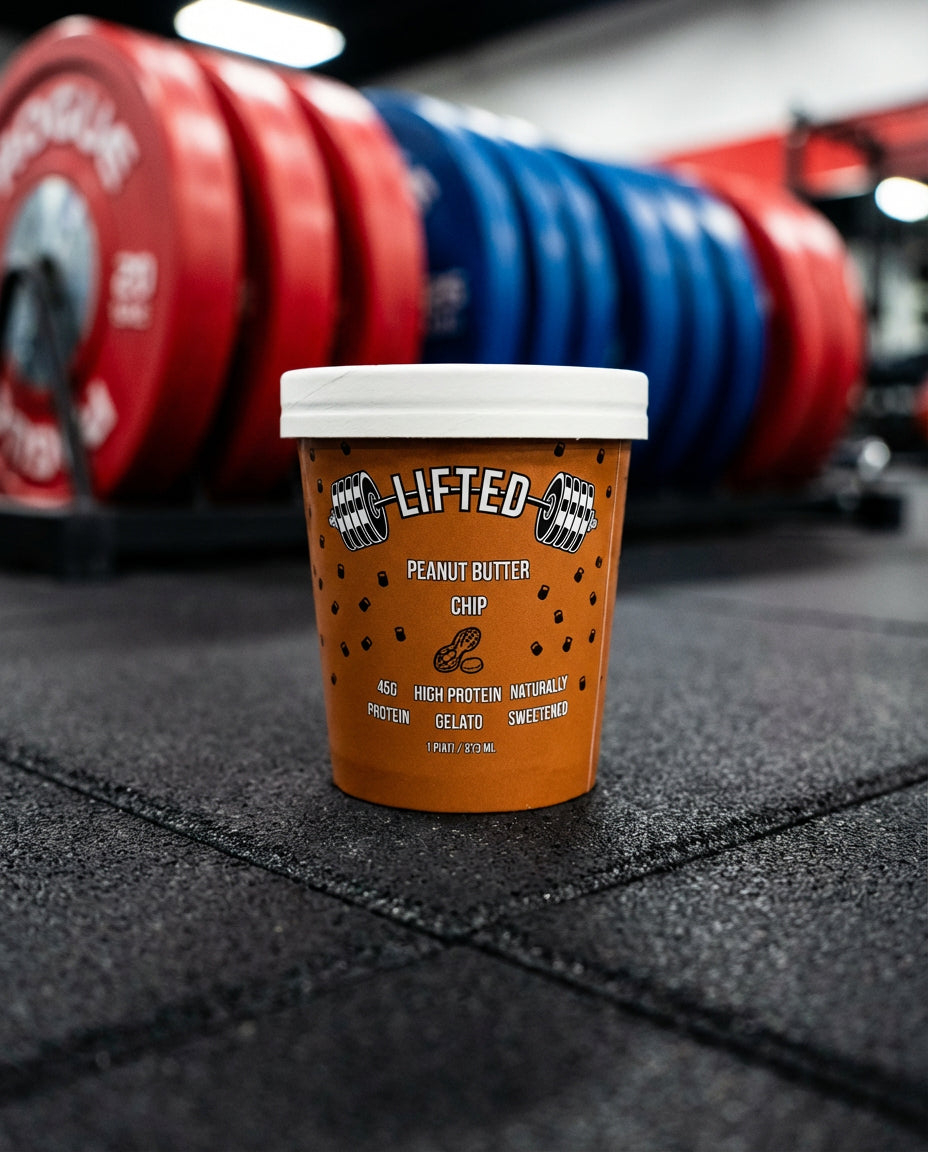
Lifted is one example of this approach done right. Instead of starting with a low-calorie ice cream and trying to add protein, they started with authentic gelato technique and built the nutrition in from the beginning.
They use allulose and monk fruit blends for clean sweetness without aftertaste. They process their protein separately to prevent chalkiness. They churn at gelato temperatures with proper overrun to maintain that dense, creamy texture.
The result is 45 grams of protein per pint with a texture and taste that doesn't scream "protein product." It's positioned in gym freezers because that's where the audience is—people who care about both performance and satisfaction.
This isn't about selling you on one brand. It's about showing that the false choice between real dessert and healthy dessert doesn't have to exist. When someone actually prioritizes both sides of the equation, you get products that work.

The Choice You Don't Have to Make Anymore
For too long, the dessert industry has operated on the assumption that you can't have both. That real taste requires real sugar and real consequences. That healthy options will always feel like settling.
But that assumption is outdated.
The technology exists. The ingredients exist. The understanding of how to balance flavor and function exists. What's been missing is the willingness to prioritize both instead of choosing one at the expense of the other.
You don't have to sacrifice your progress for satisfaction. You don't have to accept chalky, disappointing "healthy" desserts just because you're trying to take care of yourself.
Better options are out there. They're just not always easy to find yet.
If you're curious how this idea shows up in the real world, Lifted is one example worth exploring. But more importantly, the concept itself—real dessert that supports your goals instead of sabotaging them—is something worth expecting from the entire industry.
Because you shouldn't have to choose. And increasingly, you don't have to.
Looking for high-protein gelato that doesn't compromise on taste? Check if your gym carries options that deliver on both nutrition and satisfaction. And if they don't yet, let them know what you're looking for—member feedback shapes what gets stocked.