Gelato vs Ice Cream: Which Is Actually Healthier?
March 5, 2026 · Lifted Gelato
Walk into any gelateria or supermarket freezer section and you'll likely see gelato and ice cream sitting side by side, often for a similar price. Most people treat them as the same thing — a frozen dessert, a treat, something to enjoy on a warm evening. But gelato and ice cream are genuinely different products, with different ingredients, different textures, and meaningfully different nutritional profiles. If you're health-conscious, a gym-goer, or simply someone who likes to understand what goes into their food, the difference matters more than you might expect.

What Actually Makes Gelato Different from Ice Cream?
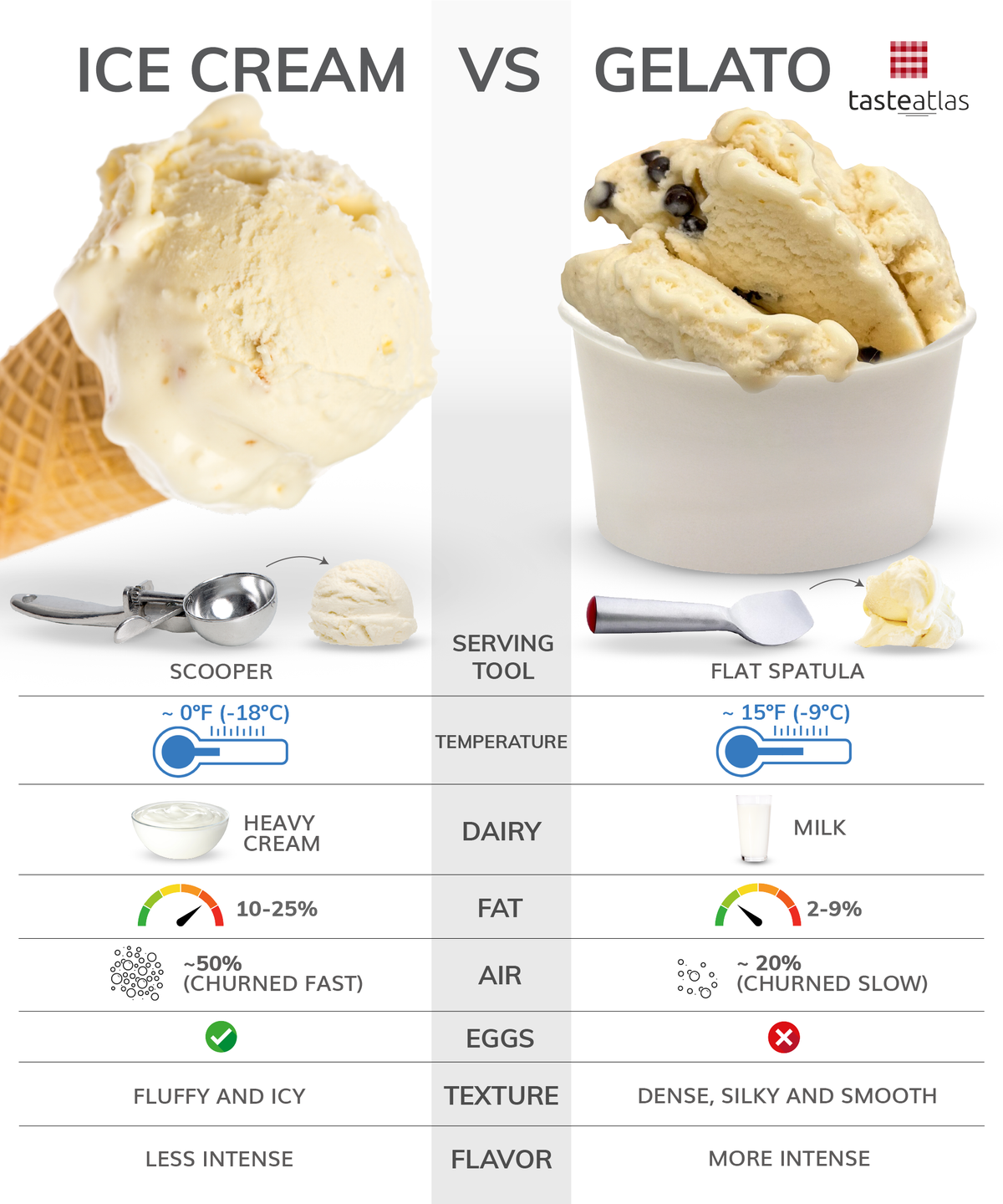
Let's start with the basics. Traditional ice cream is made with a high proportion of cream, giving it a fat content of at least 10% by legal definition — and many commercial brands push this significantly higher, often sitting closer to 15–18%. Ice cream is also churned at speed during freezing, which whips air into the mixture (called "overrun") and creates that light, fluffy texture we associate with a classic American scoop.
Gelato, by contrast, is made with significantly more milk and less cream, bringing its fat content down to around 4–9%. It's churned slowly, incorporating far less air — which is why gelato feels denser and more intensely flavored despite often being served in a smaller portion. Traditional gelato also leans on fresh dairy and natural flavor sources, with fewer artificial emulsifiers and stabilizers than you'll typically find in commercial ice cream.
The Nutritional Breakdown: Gelato vs. Ice Cream
Here's how a standard half-cup serving of each typically compares:
- Calories: Gelato 120–200 vs. ice cream 200–300
- Fat: Gelato 4–9g vs. ice cream 10–18g
- Sugar: Roughly similar — approximately 17g vs. 16g per serving
- Protein: Gelato 2–4g vs. ice cream 3–5g
At face value, gelato wins on calories and fat — largely because of its lower cream content. The trade-off is density: because there's less air in gelato, a half-cup is more filling than a half-cup of ice cream, which somewhat balances the calorie equation. Neither, however, is a nutritional powerhouse in its traditional form.
So Is Gelato Actually Healthier?
The honest answer: gelato is a lighter choice than traditional ice cream, but "lighter" alone doesn't make something nutritionally meaningful. What really separates a smart frozen dessert from a purely indulgent one isn't just the format — it's the formula. A gelato loaded with refined sugar, artificial flavours, and minimal protein is still a high-sugar treat with low nutritional return. The bigger question is always: what's actually in the product you're eating?
What Changes When You Add High-Quality Protein?
This is where the conversation gets genuinely interesting. When you take gelato's natural structural advantages — lower fat, denser texture, more intense natural flavor — and pair them with a meaningful dose of high-quality protein, you end up with something that behaves very differently in your body than either a standard gelato or a tub of regular ice cream.
Protein does several things that fat and sugar simply don't:
- It keeps you fuller for longer by triggering satiety hormones like peptide YY
- It supports muscle maintenance and recovery — crucial for anyone who trains regularly
- It slows the absorption of sugar, helping to smooth out the blood sugar spike-and-crash cycle
- It contributes meaningfully to your daily macro targets, rather than just adding empty calories
What to Look for in a High-Protein Gelato
Not all protein-enhanced frozen desserts are created equal. Here's what to check:
- Protein source: Look for high-quality dairy proteins like whey (isolate or concentrate) or milk protein isolate — these are more bioavailable than cheaper filler proteins.
- Protein quantity: Aim for a meaningful amount per serving to make a real nutritional contribution.
- Ingredient list: The shorter, the better. Avoid long lists of sugar alcohols and artificial sweeteners.
- Texture: A well-formulated high-protein gelato should soften quickly from frozen and feel genuinely creamy — not icy or grainy.
Lifted Gelato was built around exactly these standards. Each serving delivers a meaningful dose of real dairy whey (concentrate) — a high-quality, fast-absorbing dairy protein — while maintaining the smooth, dense texture and clean flavor of authentic gelato. Available in Chocolate, Vanilla, and Peanut Butter Chip, it's the kind of product that doesn't ask you to compromise on taste to hit your nutritional targets.

The Bottom Line
Gelato has a natural nutritional edge over traditional ice cream — lower fat, fewer calories, and a more flavor-dense texture that often means you're satisfied with less. But the most meaningful upgrade any frozen dessert can make is the addition of real, high-quality protein. When you combine the structure of authentic gelato with a serious protein profile, you move from "slightly better treat" to "genuinely smart food choice" — one that supports your fitness goals and doesn't leave you reaching for something else an hour later.
Lifted Gelato is a Frozen Dairy Dessert. Allergens: Vanilla and Chocolate contain Milk and Egg; Peanut Butter Chip contains Milk, Egg, and Peanuts. Made in a facility that also processes tree nuts.