Can You Eat Protein Gelato After a Workout? What Athletes Need to Know
April 1, 2026 · Lifted Gelato
After a hard training session, most athletes reach for a shake, a piece of chicken, or a carefully prepared meal. The idea of reaching for a bowl of gelato instead might sound indulgent at best and counterproductive at worst. But if you look at what post-workout nutrition actually requires — what your muscles are genuinely asking for in the hours after exercise — the picture is more interesting than you might expect.
Why Post-Workout Nutrition Matters
When you train — whether that's lifting weights, running, cycling, or a high-intensity class — you create micro-tears in your muscle fibers. This damage is the stimulus for adaptation and growth. But the repair and rebuilding process requires raw materials, delivered through what you eat in the hours that follow.
The old idea of a strict 30-minute "anabolic window" has been somewhat overstated — research suggests the window for most people is closer to two to three hours. But post-workout nutrition still genuinely matters. Getting the right nutrients into your body after training accelerates recovery, reduces next-day soreness, and supports the adaptations you're training for.
What Your Muscles Actually Need After Training
Two nutrients do most of the work in post-exercise recovery:
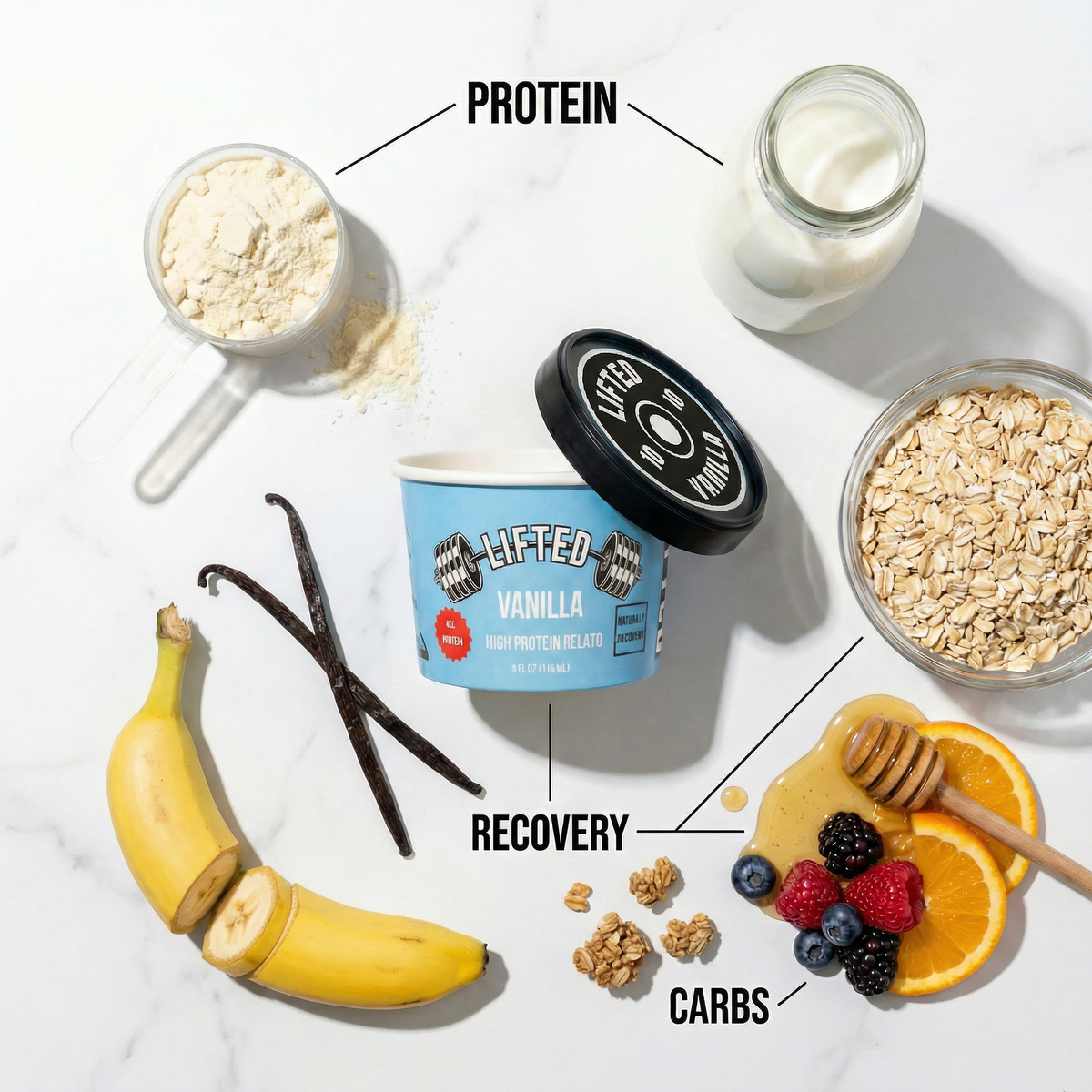
- Protein: Specifically, you need enough leucine — the amino acid most responsible for triggering muscle protein synthesis — to kickstart repair. Research suggests 20–40g of high-quality protein is needed to maximize this response, with leucine-rich dairy proteins being among the most effective.
- Carbohydrates: Training depletes glycogen stores in your muscles. Carbohydrates replenish those stores and, combined with protein, create an insulin response that helps shuttle nutrients into muscle tissue more efficiently.
Fat is less urgent in the post-workout window — and in high amounts can actually slow digestion, delaying protein and carbohydrate delivery to where they're needed most.

Can High-Protein Gelato Fit the Post-Workout Window?
With that framework in mind, let's look at what a high-quality protein gelato provides in a typical serving:
- A high dose of high-quality protein from dairy sources rich in leucine, ideal for triggering muscle protein synthesis
- A moderate carbohydrate load to begin restocking glycogen
- Lower fat content than regular ice cream — better for fast post-training digestion
- High water content from its milk base, supporting rehydration
Lifted Gelato, for example, delivers a high dose of real dairy whey (concentrate) — one of the most bioavailable and leucine-rich protein sources available, and the same protein family found in the majority of dedicated post-workout shakes. The difference is that it comes in a Chocolate, Vanilla, or Peanut Butter Chip gelato rather than a cup of liquid you're forcing down because you know you should.
The Carbohydrate Factor: Why Gelato's Natural Sugars Actually Help
One concern people sometimes raise about sweet foods post-workout is the sugar content. But in the immediate post-exercise window, moderate carbohydrate intake is actively beneficial. The natural sugars in a well-made gelato help trigger an insulin response that — paired with the protein content — supports more efficient nutrient delivery to the muscles.
Your body's metabolic environment after training is fundamentally different from rest: muscle tissue is primed to absorb glucose, and your body is actively directing nutrients toward recovery and replenishment rather than fat storage. This is the window where a small carbohydrate hit genuinely serves a purpose.
What to Look for in a Post-Workout Protein Gelato
Most high-protein frozen dessert is equally well-suited to post-workout use. Here's what matters:
- Protein quality: Whey — isolate or concentrate — is among the best post-workout protein sources, thanks to its leucine content and rapid digestion. Look for it named on the label.
- Protein quantity: Aim for a solid dose of protein per serving. Lifted Gelato sits comfortably in the effective range.
- Minimal sugar alcohols: These can slow digestion and cause GI discomfort — the opposite of what you need when your body is absorbing nutrients.
- Texture that softens quickly: A gelato that's ready to eat fast matters more post-workout than you'd think. Lifted's formulation softens quickly from frozen, making it genuinely convenient in the 30–60 minutes after training.
The Bigger Picture: Recovery Is About Consistency
No single post-workout snack is going to make or break your progress. What matters most is the consistency of your overall nutrition — hitting your protein targets daily, managing your energy balance, and fuelling your training appropriately across weeks and months.
What high-protein gelato offers is a post-workout option that people actually want to eat. And that matters more than most athletes give it credit for. If something that tastes like a genuine reward makes you more likely to nail your nutrition in the hours after training, then it's doing exactly what good sports nutrition should do: making it easy to do the right thing, consistently.
Lifted Gelato is a Frozen Dairy Dessert. Allergens: Vanilla and Chocolate contain Milk and Egg; Peanut Butter Chip contains Milk, Egg, and Peanuts. Made in a facility that also processes tree nuts.